


From Invisible to Indisputable: How Ethical Data Exposes and Prevents Ecocide

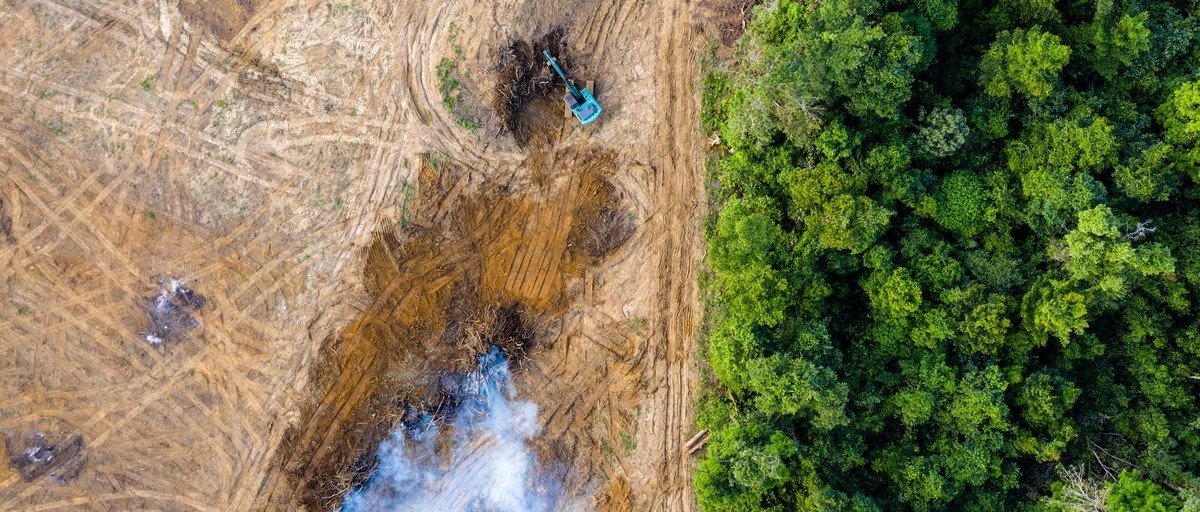
Crimes against nature rarely announce themselves. They unfold quietly, far from public view, inside remote forests at dawn, deep in oceans beyond jurisdiction, or across supply chains so complex that responsibility becomes untraceable. Ecocide thrives in silence. Its most damaging acts happen in places where no one is looking, and where harm becomes visible only after it is irreversible.

This is precisely why the conversation about ecocide cannot be separated from the conversation about data. Because the moment environmental harm becomes visible, it becomes provable. And once it becomes provable, it becomes preventable.

In the past, environmental destruction could easily be denied, downplayed, or hidden. Today, ethical data systems are dismantling that invisibility. Satellite imagery can detect illegal deforestation or industrial dumping in real time. AI-powered models can identify patterns that signal ecological stress before it escalates into collapse. Sensors can monitor air, water, and soil quality continuously. Open data platforms can crowdsource environmental reporting from citizens in affected communities.

Every one of these tools plays a role in shifting environmental harm from invisible suspicion to indisputable evidence. This is how data strengthens environmental laws and policies, validates ESG frameworks, and amplifies community voice.

But not all data…

When data is incomplete or manipulated it doesn’t prevent harm, it allows it. Then it is used to greenwash rather than illuminate.

When data becomes transparent, ecocide becomes traceable. And traceability is power.

This is why the conversation must include ethical data use, not data for extraction or surveillance, but Data for Good.

Ethical data means three things:

  1. Accuracy: what you measure reflects reality, not PR.
  2. Transparency: data is accessible to regulators, communities, and researchers.
  3. Integrity: data cannot be altered to hide wrongdoing.

Without these, data becomes another tool for environmental abuse. With them, it becomes an instrument of accountability. Ethical data transforms environmental monitoring from a voluntary gesture into a verifiable system of proof.

And proof changes everything.

Proof holds perpetrators accountable.

Proof strengthens environmental cases in court.

Proof forces corporations to act before investors act against them.

Proof empowers communities who reside closest to the harm and have the most at stake.

And even if proof does not achieve all of that immediately, its mere existence is a form of hope. It sits there as a record and a reminder that the truth was captured, that the damage was seen, that the crime was not invisible. All it needs is people with their hearts in the right place, and with enough knowledge to act on it. Without that proof, many might not even realize the crime happened in the first place.

Ecocide happens when people believe no one will see them, stop them, or prove their actions.
But data changes that calculation.

When an actor knows that a satellite can capture their illegal logging, or that real-time water quality sensors can detect toxic discharge within minutes, or that predictive models can flag suspicious land-use patterns before the first tree is cut, the risk of being caught increases dramatically.

Data doesn’t just expose damage. It discourages it.

It becomes a quiet but powerful form of environmental policing, not punitive, though. Not yet, at least. But it is still preventive. In that sense, data is not only a mirror of what happened, it is a shield that stops what might have happened.

What we are advocating for is simply this: if ecosystems are shared, the data that protects them must also be shared.

Communities have the right to know the quality of the air they breathe, the water they drink, and the ecosystems that sustain them. Regulators need credible, real-time information to act effectively. Researchers need reliable data to predict future risks. Investors need transparency to make responsible decisions.

Treating data as a public environmental good, just like clean air or clean water, is essential for preventing ecocide. It is a public right. When environmental data becomes accessible, ecocide becomes harder to commit, harder to hide, and harder to justify.

Connecting ecocide and Data for Good is not a technological exercise; it is a moral one. Because when environmental harm is exposed with clarity and evidence, the world is forced to respond. When data is used ethically, it becomes a guardian, not just of ecosystems, but of justice.

Ethical data transforms environmental protection from reactive to proactive. It turns accountability from optional to inevitable. And it shifts the global response to ecocide from “too late” to “never again.”

Only when law, ethics, technology, and data work together can we end the silence that ecocide depends on, and protect the only planet we have.


How Can We Truly Connect Ecocide and ESG… Beyond the ‘Green Talk’?

Big industries are, in many ways, the beating heart of economies. Their influence stretches across markets, politics, and the daily pulse of nations. Shifting how industry leaders think, how they perceive the environment’s right to exist, and how they act to sustain it through their own fields of work can be a genuine gamechanger. They have the power to influence the entire economy of their countries. In truth, they are the economy. So, if we want to make real progress, change has to start right there.

When it comes to preventing ecocide, laws and regulations remain the fastest and most effective mechanisms we have. We can’t afford the slow pace of voluntary change. Ecocide, in essence, refers to large-scale environmental destruction, whether through illegal deforestation, toxic dumping, or relentless resource extraction that threatens the stability of ecosystems and human life alike. Legal mechanisms can halt such acts before they reach the point of no return. This is why strengthening existing frameworks and introducing new ones, like the ongoing effort led by Stop Ecocide International to recognize ecocide as the fifth international crime under the International Criminal Court, is so critical. Existing environmental laws such as the Paris Agreement, the EU Green Deal, and national acts on biodiversity and pollution control already demonstrate how law can guide humanity toward shared ecological responsibility.

But laws alone, as powerful as they are, work from the outside in. They impose change through compliance. ESG, on the other hand, has the potential to work from the inside out, transforming how corporations internalize their moral and environmental duties.

And this is how ESG fit into this picture.

At its core, ESG (Environmental, Social, and Governance) offers a framework for responsible decision-making that goes beyond profit. It embeds values into business conduct, asking organizations to consider the people they affect and the planet they depend on its resources. While ESG is not a legal system, it has become the business world’s closest equivalent. Today, over 90% of major companies publish ESG reports, and investment funds increasingly channel capital based on ESG performance. This effectively turns voluntary commitment into de facto regulation.

This is where ESG becomes a bridge between economic activity and environmental justice. Think of it as a kind of delegate for environmental law within the private sector, a self-regulatory system that translates legal and ethical expectations into operational behavior. It bridges the gap between compliance and conscience, making sustainability a measurable, reportable, and investable asset. It also pushes industry leaders to respect ecological boundaries not merely out of obligation, but out of strategic foresight.

Investors, partners, and communities now evaluate companies not only for their profitability but for their impact. A poor ESG record can cost reputation, trust, and ultimately access to capital. So even when corporations act out of self-interest, their alignment with environmental principles contributes to the collective good.

This is what we mean by “change from within.” It’s about making the market system itself a tool for protection rather than exploitation. When ESG becomes embedded in the DNA of corporate behavior, it nurtures a new form of accountability, one that aligns business success with planetary health.

In truth, both Ecocide and ESG are trying to address the same imbalance from opposite directions. Ecocide defines the legal and ethical boundaries of what must never happen; ESG defines the corporate pathways of what should happen instead. And perhaps, at the end of the day, both forces are part of the same principle: a mutual, reciprocal reaction between humans and nature. The environment gives back what we give to it. The more we protect it through our actions, industries, and systems, the more it protects us in return. Every act of disregard invites reaction; floods, droughts, loss of biodiversity, collapsing systems that once sustained us. But every act of respect, restoration, or conscious restraint also triggers a response; resilience, regeneration, balance.

Our actions echo. The question is whether that echo will come back as harmony or as warning.

To truly connect Ecocide and ESG beyond the “green talk” is to recognize that law defines responsibility, ESG enacts it, and nature mirrors it back to us. Real progress begins when compliance evolves into conscience and when protecting the planet becomes both our moral duty and our collective interest.

Why Ecocide, ESG, and Data for Good Belong in the Same Conversation

In recent years, the concept of ecocide has gained growing attention as a proposed international crime designed to hold individuals and corporations accountable for large-scale environmental destruction.

As defined by the Independent Expert Panel for the Legal Definition of Ecocide, convened by the Stop Ecocide International Foundation, it refers to “the unlawful or wanton acts committed with knowledge that there is a substantial likelihood of severe and either widespread or long-term damage to the environment being caused by those acts.”

In simpler terms, ecocide means causing serious and lasting harm to nature. The kind of damage that devastates ecosystems and human life alike. Think of massive oil spills, deliberate rainforest clearing, or toxic dumping in rivers that communities depend on for survival. These are not isolated accidents but acts of environmental violence with consequences that span generations.

At the same time, ESG (stands for Environmental, Social, and Governance) has become a guiding and a heavily relied on framework for responsible investment and management. It helps organizations and investors make decisions that take into account not only profit, but also the people they impact and the planet they depend on its resources. In short, ESG translates values into measurable corporate behavior.

Now, what about Data for Good? Simply put, it’s the use of data to build products, develop solutions, or address the most pressing social, environmental, or economic challenges. At the ESG and Data for Good Center of Excellence, we define “the good” through the lens of the UN’s 17 Sustainable Development Goals (SDGs), which is a universal roadmap toward a better and more sustainable future. Every initiative that uses data to advance these goals contributes to what we call “the good.”

Within the broader sustainability field, terms and concepts often overlap or get mixed up. Yet, there’s always a way to meaningfully connect them. Ecocide and ESG, for example, may seem to operate on different levels. One legal and ethical, the other financial and strategic. However, both ultimately pursue the same purpose: the well-being of our planet and all who inhabit it. To connect these ideas effectively, we need tangible, evidence-based, and actionable solutions and not just “green” words.

One of the greatest strengths of the development field is its interconnectivity. When ideas can be aligned conceptually, they can often be transformed into practical, measurable outcomes. This interplay of ideas is what drives innovation. The more diverse elements we bring together, the richer the innovation process becomes, and the stronger our capacity to develop solutions that actually work.

But as the famous quote from Oppenheimer says, “Theory will only take you so far.” That’s where data comes in: turning theory into practice. Data provides one of the most powerful and efficient tools to not only design solutions but also to test their feasibility, measure their impact, and refine them for real-world application. It gives us a way to validate ideas before committing extensive resources to them.

For example, artificial intelligence and data analytics can directly help address ecocide-related issues. Satellite data and AI-powered environmental monitoring systems can track deforestation, illegal mining, or ocean pollution in real time, allowing authorities to detect environmental crimes before they cause irreversible damage. Predictive models can assess ecological risk or forecast potential ecosystem collapse, guiding stronger, data-driven policy decisions. Open data platforms can also crowdsource environmental reporting, making crimes against nature more visible and accountable.

These are not distant possibilities; they are existing tools that can be scaled and enhanced through collaboration and shared commitment.

So how do we actually connect these concepts? By positioning data as the accountability engine between ESG intent and environmental justice.

Ecocide establishes the moral and legal boundary; ESG defines the corporate behavior within that boundary; and Data for Good operationalizes both, turning environmental harm into measurable evidence and transparency into deterrence. When organizations use open, verifiable data systems to track ecological impact, they don’t just comply with ESG metrics, they actively prevent ecocide. This is where data stops being “green talk” and becomes a governance tool for planetary responsibility.

At this stage, ignoring the potential of data to address such critical issues is more than negligence, it reflects a failure of responsibility for anyone in a position to make decisions that shape communities and ecosystems. Data has never been more accessible and actionable, given that, inaction is no longer justifiable.

In conclusion, connecting Ecocide, ESG, and Data for Good is not a theoretical exercise, instead, we regard it a necessity. It’s how we move from pledges to measurable progress, from “green talk” to tangible impact. In today’s world, good intentions are not enough. We must demonstrate, measure, and continuously improve our actions.

In the end, the relationship between humans and nature is not one-sided. It is a cycle of reciprocity: what we give is what we receive. When we exploit, we invite scarcity and instability; when we protect, we nurture abundance and resilience. The Earth’s response mirrors our behavior toward it. And only when law, ethics, finance, and data work together in harmony with that truth can we truly protect the only planet we have.