



Water Bankruptcy: The World Has Passed the Point of No Return

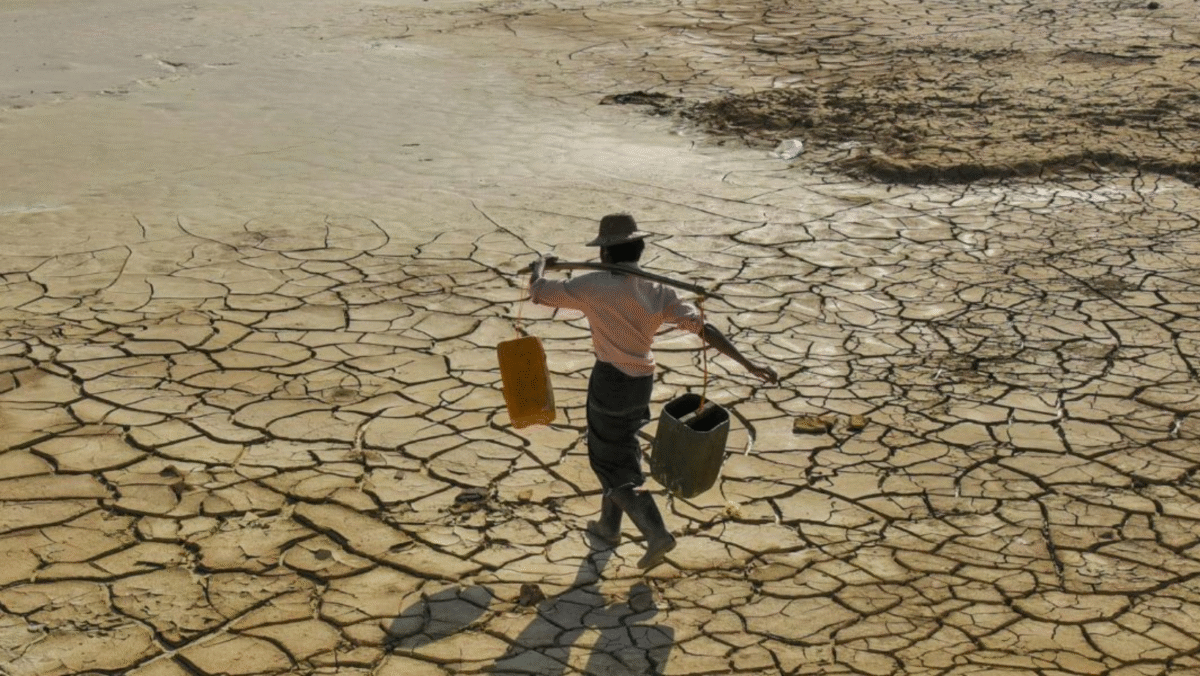
Water Stress. Water Crisis. And now, Water Bankruptcy.
These terms have long been used to describe our water reality. But today, the world is reaching a point where it can no longer return from it: Global Water Bankruptcy.
In its latest 2026 report, the The United Nations University Institute for Water, Environment and Health (UNU-INWEH) announced that the world has surpassed the stages of water stress and water crisis. These terms are no longer sufficient descriptions of our reality. Water stress implies high pressure that can still be reversed, while a water crisis refers to acute shocks that can be overcome. What we are facing now is a post-crisis condition, where losses of natural water capital are irreversible and water systems can no longer bounce back to historic baselines.
The scale of this reality is no longer abstract; it is already shaping how people live. More than half of the world’s large lakes have lost water since the 1990s, leaving nearly one-quarter of the global population dependent on freshwater sources that are steadily disappearing. Today, almost three-quarters of the world’s population live in countries classified as water insecure or critically water insecure, and half of the world’s large cities are growing in regions already under high water stress. For around 4 billion people, water scarcity is not a distant threat but a recurring experience, returning for at least one month every year. At the same time, the regions struggling with declining or unstable water storage are the very places where much of the world’s food is produced, quietly tying everyday meals to fragile and failing water systems.
The Middle East and North Africa (MENA) region represents one of the world’s most acute water bankruptcy hotspots, where multiple structural pressures converge rather than act in isolation. The region combines extreme water stress with high climate vulnerability, as rising temperatures and prolonged droughts further reduce already limited freshwater availability. Water is increasingly spent where it delivers the least return, with agriculture consuming vast amounts while producing modest yields, deepening food insecurity and dependence on imports. As rivers and aquifers decline, countries turn to energy-intensive desalination, quietly binding water security to energy demand and rising emissions.
Yet this post-water crisis, this global water bankruptcy, is not confined to one region. When water scarcity undermines farming in one place, the effects ripple across global markets, political stability, and food security elsewhere. These systems are tightly interconnected through trade, migration, climate feedbacks, and geopolitical dependencies. As a result, the global risk landscape has fundamentally changed. Water bankruptcy is no longer a collection of isolated local crises, but a shared global risk that demands a new type of response: bankruptcy management, not crisis management.
Although the global water cycle has moved beyond its safe planetary boundary and nearly all regions are affected, the impacts of this global bankruptcy are not felt equally. Farmers stand at the very heart of this crisis. But the costs extend far beyond them, falling disproportionately on rural communities, Indigenous Peoples, informal urban residents, women, youth, and other vulnerable groups in the Global South. Those with the least power are bearing the highest costs, while the benefits of overuse have largely accrued to more powerful actors.
Today, rivers, lakes, aquifers, wetlands, and glaciers are being pushed beyond tipping points, with no return to past baselines. In this new reality, governments must move beyond managing short-term crises and begin managing long-term bankruptcy. The consequences are systemic, affecting food security, economic development, biodiversity, and social stability.
Data and digital tools can support this shift, improving water management, supporting those whose lives and livelihoods depend most on water, and guiding more informed decisions about increasingly limited resources. Solutions and transition plans must be designed with fairness at their core, prioritizing those who are most exposed and most in need of protection. We may all be paying the price of this new water reality, but the unavoidable losses must be shared equitably because, without fairness and justice, sustainability slips further away, turning into an empty word spoken often, achieved by no one.